Understanding Visual CPQ Software
In today's dynamic business landscape, companies are constantly seeking innovative solutions to enhance their sales processes and improve customer engagement. One such solution gaining traction is visual CPQ software, which stands for Configure, Price, Quote. This technology allows businesses to streamline the complexity of product configuration, pricing, and quoting, particularly for those offering customizable and intricate products. As the manufacturing and distribution sectors increasingly embrace digital transformation, understanding the distinct features and advantages of visual CPQ software is crucial for staying competitive.
What is Visual CPQ Software?
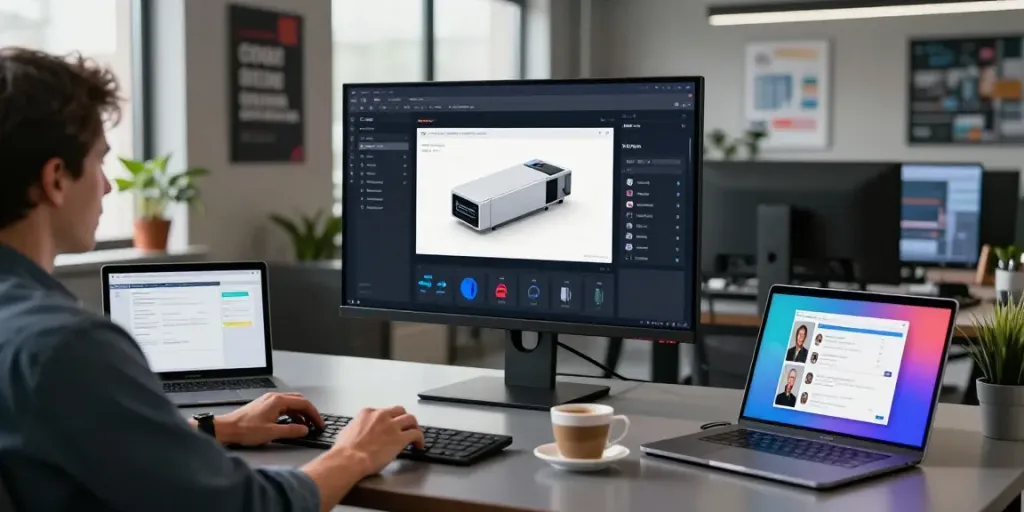
Visual CPQ software combines the traditional configure, price, quote functionalities with a visual interface, enabling customers and sales teams to interactively customize products. This type of software provides a three-dimensional (3D) representation of products, allowing users to see their configurations in real-time. This enhanced visualization not only aids in better understanding but also significantly reduces errors commonly associated with complex configurations.
Differences Between Visual CPQ and Traditional CPQ
While both visual CPQ and traditional CPQ aim to streamline the sales process, they differ fundamentally in their approach. Traditional CPQ primarily focuses on the logical aspects of pricing and configuration, using standardized templates and flat interfaces. In contrast, visual CPQ leverages graphical representations and interactive modules, which allow users to visualize and manipulate products dynamically. This visual layer adds a richer, more engaging experience for buyers, enhancing their understanding of the product's features and potential customizations.
How Visual CPQ Enhances Product Configuration
By integrating visual elements into the configuration process, visual CPQ enhances product understanding and customer satisfaction. Users can leverage this technology to create tailored products that meet specific needs while seeing immediate feedback on how their choices affect the final product—whether it’s adjusting colors, materials, or components. Interactive design tools further allow sales teams to present options that resonate with customer preferences, ultimately leading to higher conversion rates.
Benefits of Implementing Visual CPQ Software
Real-Time Pricing and Quoting Advantages
One of the most compelling advantages of visual CPQ software is its ability to provide real-time pricing and quoting. As customers configure their products, the software instantly updates pricing based on the selected options, applying relevant discounts, taxes, and pricing rules. This immediate feedback not only speeds up the sales process but also instills confidence in customers as they receive accurate, customized quotes without lengthy delays.
Improving Customer Experience with Visual Configurators
Visual configurators create a highly engaging experience for customers. By allowing them to interactively explore different configurations, potential buyers feel more involved in the purchasing journey. This technology helps to demystify complex products, making it easier for customers to understand what they are buying. The incorporation of 3D models and visualization tools enhances satisfaction by ensuring that the final product matches their expectations.
Streamlining Sales Processes Across Teams
Integrating visual CPQ software into an organization’s operations streamlines communication between various teams, including sales, engineering, and production. With a single source of truth for product configurations and pricing, everyone has access to the same information, minimizing discrepancies and enhancing collaboration. As teams work from the same platform, they can efficiently share insights, making it easier to adapt to changes in customer demands or market conditions.
Integrating Visual CPQ with Existing Systems
Connecting Visual CPQ with CRM and ERP Systems
To maximize the benefits of visual CPQ software, integration with existing systems such as Customer Relationship Management (CRM) and Enterprise Resource Planning (ERP) is essential. This integration ensures that all customer interactions, configurations, and transactions are captured in real-time, providing a comprehensive view of the sales process. Connecting visual CPQ with these systems allows for seamless data flow, which can lead to better decision-making, improved customer service, and increased operational efficiency.
Exploring Integration Options for E-commerce
As e-commerce continues to grow, integrating visual CPQ with online sales platforms is becoming increasingly important. This integration enables businesses to offer a fully interactive shopping experience, allowing customers to configure products directly on their websites. By embedding visual CPQ solutions into e-commerce sites, organizations can enhance customer experience and drive higher engagement and conversion rates. Additionally, deeper integration with e-commerce platforms can facilitate automated workflows that handle pricing updates, inventory management, and order processing.
Best Practices for a Smooth Implementation
Implementing visual CPQ software requires careful planning and execution. Here are several best practices to ensure a smooth transition:
- Define Your Goals: Clearly outline the objectives you hope to achieve with visual CPQ implementation, such as reducing quote errors or improving sales cycle times.
- Involve Stakeholders: Engage all relevant stakeholders early in the process, including sales, marketing, and IT teams. Their insights will be invaluable in tailoring the solution to meet your needs.
- Invest in Training: Ensure that your team is well-trained in using the new software. Comprehensive training minimizes resistance and increases adoption rates.
- Test Rigorously: Conduct thorough testing of the visual CPQ system before it goes live to identify and address any potential issues.
- Monitor and Adapt: After implementation, continually monitor the system's performance and be open to making adjustments to optimize the software’s functionalities.
Comparing Visual CPQ Vendors
Key Features to Look for in CPQ Software
When evaluating different visual CPQ vendors, consider these key features:
- 3D Visualization: Ensure the software offers robust 3D visualization capabilities for interactive product configurations.
- Real-Time Pricing Engine: Look for solutions that provide instant pricing updates as product configurations change.
- Integration Capabilities: Assess how well the CPQ can integrate with your existing CRM, ERP, and e-commerce platforms.
- User-Friendly Interface: The software should have an intuitive interface that is easy for both customers and your sales team to navigate.
- Mobile Compatibility: As more users shift to mobile platforms, a mobile-friendly design is crucial for accessibility on various devices.
Performance Metrics for Vendor Evaluation
To assess the effectiveness of visual CPQ vendors, utilize specific performance metrics, such as:
- Quote Accuracy: Measure the percentage of quotes generated that result in successful sales to evaluate the accuracy of the CPQ system.
- Time to Quote: Track the average time taken to generate quotes before and after implementing the CPQ solution.
- User Adoption Rates: Monitor how quickly and effectively your team adopts the new software.
- Customer Satisfaction Scores: Gather customer feedback to assess how the new configuration process impacts their purchasing experience.
Case Studies from Top Visual CPQ Solutions
Understanding how other organizations have successfully implemented visual CPQ solutions can provide valuable insights. For instance, a major manufacturer was able to reduce quote generation time by 50% through the utilization of a robust visual CPQ system. This allowed their sales team to focus more on customer engagement rather than administrative tasks, ultimately leading to a 25% increase in sales conversions. Another case involved a complex machinery company that streamlined its product configuration process, resulting in a significant reduction in errors and improved customer satisfaction ratings.
Future Trends in Visual CPQ Software
Emerging Technologies Influencing CPQ Solutions
As technology advances, visual CPQ software is set to benefit from several emerging trends:
- AI Integration: Artificial intelligence (AI) capabilities will enhance the configurator experience by providing intelligent recommendations based on customer preferences and behaviors.
- Augmented Reality (AR): Integration of AR will allow customers to visualize products in their environment before making a purchase, enhancing engagement.
- Enhanced Data Analytics: Advanced analytics tools will enable businesses to glean deeper insights from customer interactions, informing future product development and sales strategies.
Predictions for Visual CPQ in 2026 and Beyond
Looking ahead to 2026 and beyond, the visual CPQ landscape is expected to evolve significantly. Businesses will increasingly adopt predictive analytics to anticipate customer needs, tailoring configurations more effectively. Moreover, improved machine learning capabilities will allow CPQ solutions to learn from data patterns, continuously optimizing pricing structures and configuration options.
Expert Insights on Adapting to Industry Changes
Industry experts assert that adaptability will be critical for businesses relying on visual CPQ solutions. As market conditions change—such as shifts in consumer preferences or the emergence of new technologies—organizations must remain agile. Emphasis on modular systems that can easily integrate new functionalities will be a key focus for future CPQ solutions, ensuring that businesses stay at the forefront of innovation.
What challenges can arise when transitioning to Visual CPQ?
The transition to visual CPQ software may not be without challenges. Organizations may encounter resistance from employees accustomed to traditional catalog systems. Additionally, integration with existing legacy systems can pose technical hurdles. Thorough change management practices and strategic planning can help mitigate these challenges and ensure a smoother transition process.
How can visual CPQ software streamline complex sales processes?
Visual CPQ software streamlines complex sales processes by providing an intuitive platform for product configuration that reduces errors and speeds up quote generation. By automating pricing calculations and approvals, sales teams can focus on customer-centric activities rather than time-consuming administrative tasks. Additionally, the integrated feedback loop helps ensure that all stakeholders are on the same page, improving overall efficiency.
What industries benefit the most from visual CPQ solutions?
Manufacturing, construction, and telecommunications are among the industries that stand to benefit significantly from implementing visual CPQ solutions. These sectors often deal with complex products requiring multiple configurations and options, making visual CPQ an ideal solution for enhancing sales processes and improving customer satisfaction.
Can Visual CPQ Software handle multi-language support?
Many modern visual CPQ solutions offer multi-language support, catering to businesses operating in global markets. This capability allows companies to provide a consistent and localized experience for customers, regardless of their language preference. Such inclusivity can significantly enhance customer engagement and satisfaction across diverse geographical areas.
What are the top features for effective visual product configuration?
The most effective visual product configuration tools often include features such as 3D visualization, real-time pricing updates, customizable templates, mobile compatibility, user-friendly interfaces, and seamless integration with other business systems. Prioritizing these features can ensure that the visual CPQ solution meets the varied needs of both customers and sales teams.